Thursday, March 28, 2024

TorrentFreak's Latest News


Ukraine Commits to Piracy Crackdown, Draws Up Blacklist, Joins WIPO ALERT
Andy Maxwell, 28 Mar 11:46 AM

ukraineAfter more than two years of incalculable losses following Russia's full-blown invasion in 2022, Ukraine continues to defy the odds as it fights for the right to exist as an independent state.

With no obvious end in sight and politics in the United States undermining offensive capability, Ukrainian gains are being reversed in several front line regions, a situation predicted to further deteriorate later this year.

Yet for a country being consumed by war, Ukraine is still taking time to plan for a future in the EU. In that respect, matters related to intellectual property require the closest attention.

Ukraine Pushes Ahead With Copyright Reforms

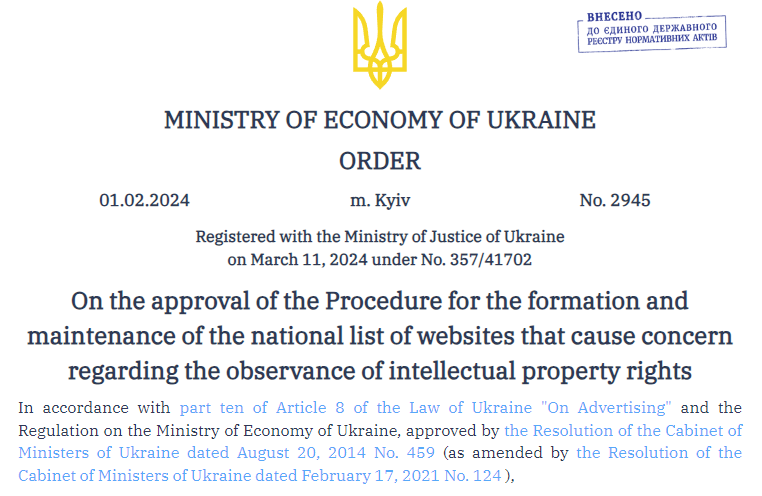
After progress was reported in 2023, Ukraine's Ministry of Economy issued an order dated February 1, 2024, titled: "On Approval of the Procedure for Formation and Maintenance of the National List of Websites Raising Concerns Regarding the Observance of Intellectual Property Rights."

On March 11, 2024, the Ministry of Justice registered order 357/41702 and on March 21, 2024, it was adopted by the Ministry of Economy.

Order (translated)ukraine order

This will see Ukraine become a full participant in the World Intellectual Property Organization's WIPO ALERT program, which operates around a centrally-maintained database of piracy platforms nominated by rightsholders in participating countries.

Ukraine Sees Future in Europe, WIPO Invests in Russia

Sites and services listed on WIPO ALERT should in theory find it much more difficult to fund their activities through advertising revenue. Ukraine views its participation in the program as a positive step in its bid for closer ties with the EU.

"Despite the challenges of a full-scale war, we are making every effort to protect copyright and related rights on the Internet for Ukrainian and foreign intellectual property rights holders," says Yuliia Svyrydenko, First Deputy Prime Minister of Ukraine and Minister of Economy.

"Ukraine has become one of the first countries in the world to comprehensively implement a relevant mechanism based on a secure online platform where authorized member states of the World Intellectual Property Organization can upload information about websites and applications that infringe copyright from the point of view of national norms. This is also a confident step towards Ukraine's European integration."

Yet despite its invasion of Ukraine and threats to Western intellectual property, WIPO continues to operate an office in Moscow and provide funding for projects in Russia.

That drew a fiery response from Ukraine last summer, which criticized the allocation of significant funds to a country "which blatantly violates WIPO principles and its statutory obligations" and does not "deserve the privilege to host a WIPO Office."

Ukraine is the 15th country to join the WIPO ALERT program, following recent additions Uzbekistan and the Philippines. Currently just seven countries allow searching of their databases. They include Italy, Russia, Spain, Peru, Ecuador, Lithuania and Greece.

From: TF, for the latest news on copyright battles, piracy and more.

Z-Library Scammers Use Email Campaigns to Lure Users and Extract Payments
Ernesto Van der Sar, 27 Mar 10:02 PM

zlibraryZ-Library is one of the largest shadow libraries on the Internet, hosting millions of books and articles that can be downloaded for free.

The site defied all odds over the past two years. It continued to operate despite a full-fledged criminal prosecution by the United States, which resulted in the arrest of two alleged operators in Argentina.

According to the latest available information, these two defendants are still fighting their extradition. Meanwhile, the Z-Library site has continued to operate as if nothing ever happened, serving books to millions of people all over the world.

Z-Library Fundraising

A few days ago, the shadow library announced a new fundraising campaign to generate revenue. While users can buy premium access all year round to obtain access to additional features and downloads, Z-Library regularly hosts additional donation drives to fund project maintenance and development.

"Although the last 2 years have been challenging for the project and the team, we are not giving up and are continuing to work on the development of the library," the team writes, asking users to contribute.

As last time, thousands of dollars are quickly pouring in from all over the world. Despite the legal challenges and the ongoing criminal investigation, many people seem happy to chip-in through various payment options, including cryptocurrencies.

Donation Options
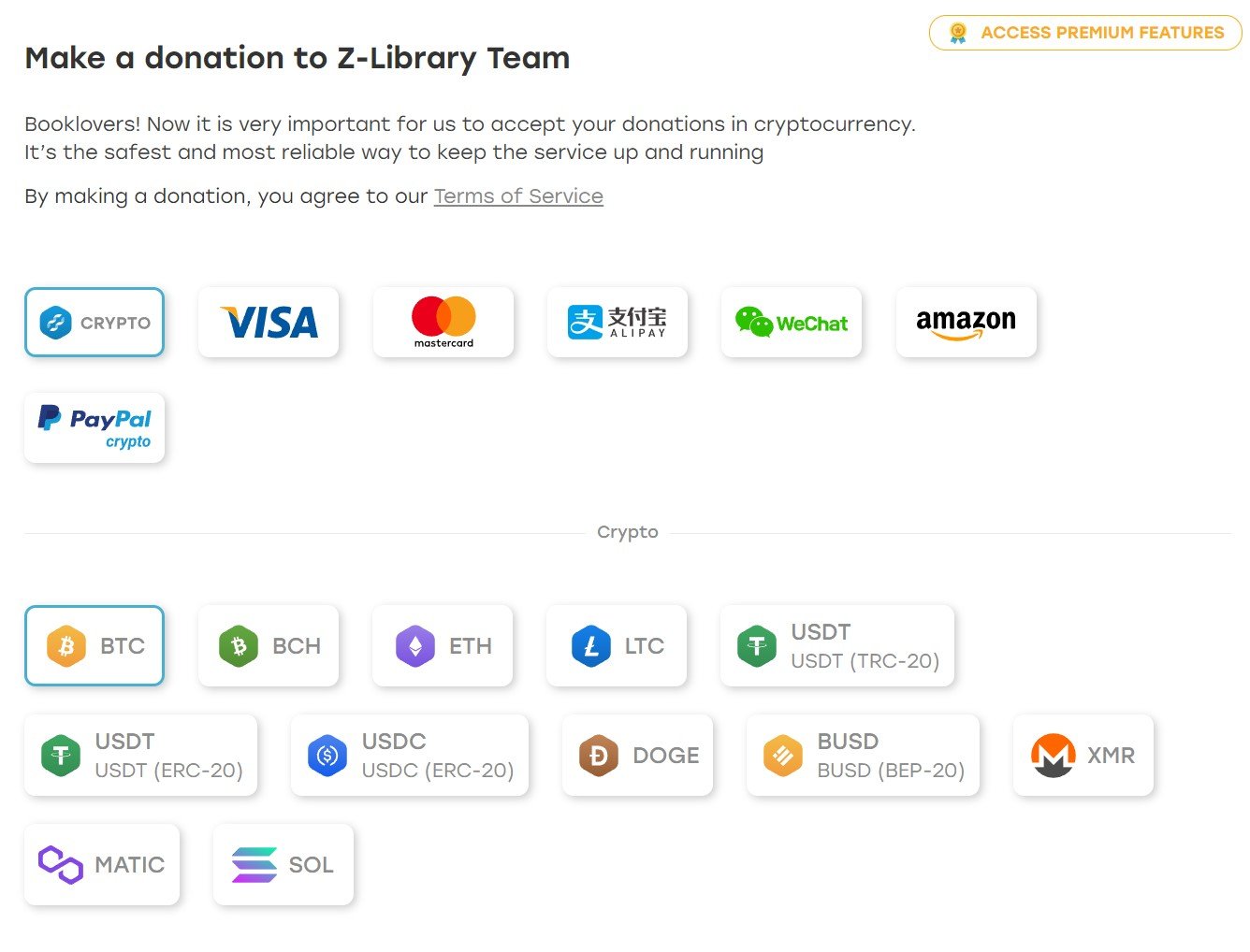
donate zlibrary

This type of generosity from users is rarely seen on 'pirate' sites. While the shadow library's operators are undoubtedly happy with the support, popularity also comes with a major downside; scammers.

Soon after Z-Library lost its main domain names following U.S.-orchestrated seizures, outsiders stepped in to hijack the traffic. The site has repeatedly warned against these "fraudulent" and "unsafe" copycats but the problem never went away. On the contrary, it's getting worse.

Email Scams

Over the past several weeks, there have been dozens of reports from Z-Library users who received emails, purported to be from the Z-Library team, alerting them to a new domain name. One of the early versions included the following message:

"It is with a heavy heart yet hopeful spirit that we reach out to you. We're entering a period of significant change at Z-Library.

As an integral part of our community we believe it's important you're among the first to learn of our transition to a new domain: z-lib.id. This change, though challenging, paves the way for an enhanced, more robust Z-Library experience.

Your steadfast support has been a beacon during our journey. As we navigate these new waters, your continued presence and advocacy are more important than ever. We hope you'll join us in embracing this change and help in sharing our new address, z-lib.id, within your circles."

These emails were received by actual Z-Library users but the domain being promoted has nothing to do with the original Z-Library project. On the contrary, it appears to be linked to a popular copycat site that's been around for a while.

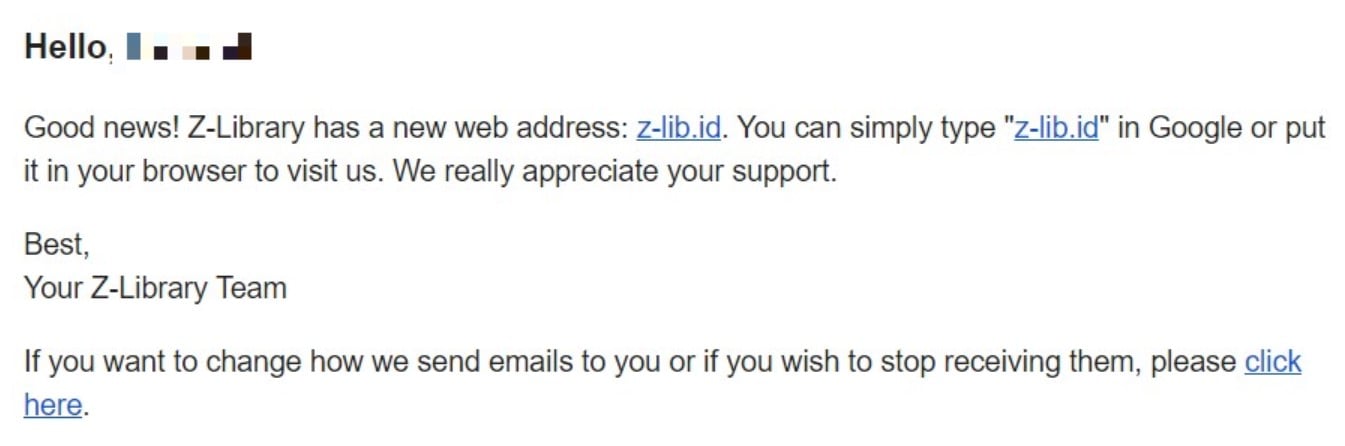
In recent weeks these 'scammy' emails have continued, but the messaging has changed somewhat. An email sent to many people this month is more to the point, urging people to visit and bookmark the new domain.

"Good news! Z-Library has a new web address: z-lib.id. You can simply type "z-lib.id" in Google or put it in your browser to visit us. We appreciate your support."

Scam Email
zlibmail

Needless to say, these emails are not being sent by the Z-Library team but by scammers attempting to drive traffic to their site. There's a clear profit motive, as "premium" access is currently required to download anything.

'Not Compromised'

Of course, it's no surprise that outsiders are trying to profit from the popularity of an existing piracy brand. We have seen variations of this theme for several decades. However, the email campaigns are rather novel.

At this point, it's not clear how the scammers obtained the emails. In an email to TorrentFreak, the real Z-Library team acknowledges the scam problems but says that there's no sign that their systems were compromised in any way.

"Unfortunately, the situation with fraudulent mailings is getting worse. Since our domains were blocked in November 2022, there have been at least a few independent scam sites posing as z-library. They use our name, design, and highly similar domain names.

"[W]e are confident that there have been no incidents of user data leakage. However, we strongly recommend that you change the password for your account," a Z-Library spokesperson writes.

The team suggests that recipients of the scam emails may have tried to sign into one of the scam sites in the past. That would have exposed their email address and password to these people, which is why Z-Library believes it's important to update this information.

Scam Connection

It's not clear who is behind these misleading email campaigns, but there are some interesting patterns to observe. The .id domain name promoted in the emails uses the same Cloudflare nameservers as z-lib.is did in the past.

The identical nameservers are not solid proof, however, as there are thousands of sites using the same ones. However, there's an additional traffic pattern that links the two domains as well.
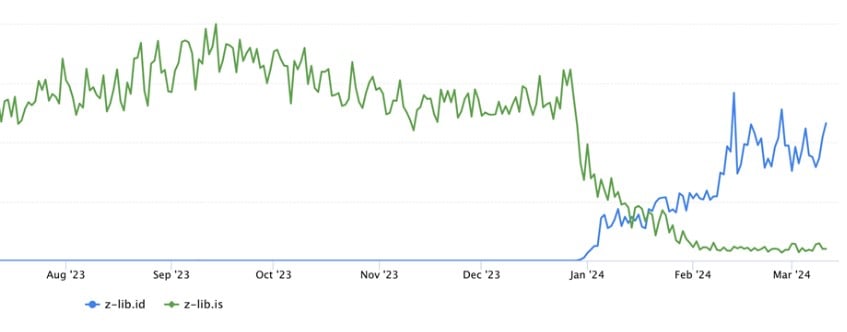
zlib domains

As seen above, traffic to the .is domain tanked in February, around the time when the emails started coming in, while traffic to the new .id domain surged. This suggests a link between the two domains. Perhaps the scammers somehow lost control over their old domain, triggering them to launch the email campaign.

Seizures and other Troubles

Whatever the reason, the official Z-Library team continues to caution users to be on the lookout for copycats, including via an updated warning banner that mentions the new domain name.

Scam Banner

scams

The Z-Library team believes that scammers and copycats are regularly DDoSing its servers too. At the same time, they have tried to add their links to the official Wikipedia page and hijack the top positions in search engines.

Of course, scammers are only part of the challenge. The U.S. Government has also repeatedly seized the site's domain names, which creates an opportunity for copycats to increase their traffic. The latest seizure round was last November, but that may not be the last.

On the legal front, there hasn't been any movement in the U.S. criminal case recently. The two alleged operators filed a motion to dismiss the criminal complaint last summer, but news has been quiet since then.

From: TF, for the latest news on copyright battles, piracy and more.

270x90-blue

Are you looking for a VPN service? TorrentFreak sponsor NordVPN has some excellent offers.


Powered by Mad Mimi®A GoDaddy® company

Wednesday, March 27, 2024

TorrentFreak's Latest News


'Operation 404' Results in First Prison Sentence for Pirate IPTV Operator
Ernesto Van der Sar, 27 Mar 11:05 AM

operation 404In the fall of 2019, Brazilian law enforcement agencies launched the first wave of anti-piracy campaign 'Operation 404,' referring to the well-known HTTP error code.

With help from law enforcement in the United States, the United Kingdom, and Argentina, the authorities took down more than a hundred sites and services, while several suspects were arrested.

Following its initial successes, several new waves 'Operation 404' were initiated over the ensuing years. Each wave led to raids and takedowns across the country, with assistance from international law enforcement partners. It was clear that Brazil had its enforcement apparatus in order, but the outcomes of these efforts in terms of follow-up actions were largely unknown.

This week, anti-piracy group ALIANZA booked its first '404' related victory in court. Following a criminal complaint from the group, Judge Marina Figueiredo Coelho of the Fifth Criminal Court of Campinas, Sao Paolo, convicted the operator of a pirate IPTV service that was taken down in 2020.

Prison for Flash IPTV Operator

The operator of Flash IPTV, who is referred to by the initials A.W.A.P., was found guilty of criminal copyright infringement and sentenced to five years and four months in prison.

Flash IPTV was a relatively large IPTV service with 13,547 active users at its peak. According to local news reports, the service generated R$4,542,034 ($912,000) in revenue over twelve months, before it was taken offline in 2020 as part of the second 'Operation 404' campaign.

Speaking with TorrentFreak, ALIANZA says that this is a historic verdict, as it's the first criminal IPTV prosecution linked to 'Operation 404' in Brazil.

"We appreciate the commitment of the police and judicial authorities in resolving this important case. The conviction of A.W.A.P. is a milestone that reinforces our commitment to defending the rights of creators and fighting against illegal practices that harm the creative economy," says Víctor Roldán, ALIANZA's executive director.

More to Come?

A copy of the verdict wasn't released to the public, as is common with these types of convictions, so further details are scarce.

While Operation 404 resulted in many arrests over the years, follow-up prosecutions have been rare in Brazil. Previously, ALIANZA did score a similar victory in Ecuador, where the operator of the pirate IPTV service IPTVlisto.com was sentenced to a year in prison.

Last fall, Brazilian authorities conducted the sixth wave of Operation 404 and more are expected to follow in the future. These enforcement initiatives are broadly praised by rightsholders and the recent conviction will only strengthen their support.

There's always room for improvement, of course. A few weeks ago, the International Intellectual Property Alliance (IIPA) recommended Brazil to remain on the US 'Special 301' Watch List of countries with IP-related challenges.

IIPA saw various positive developments, especially regarding Operation 404. However, disagreement between rightsholders over enforcement action could still improve.

"Brazil still suffers from a lack of specific norms and regulations regarding the enforcement of copyrighted works over the Internet and a lack of resources and staff to support enforcement actions considering the reach and amount of content piracy in the region," IIPA wrote.

From: TF, for the latest news on copyright battles, piracy and more.
Piracy Shield Source Code & Internal Documentation Leak Online
Andy Maxwell, 26 Mar 10:30 PM

Logo piracy shieldEver since Italian authorities announced their intent to introduce an even more aggressive anti-piracy blocking system than the one already in place, controversy has rarely been far behind.

Recent reports of avoidable overblocking, a reluctance to admit that the Piracy Shield system is fallible, and new reports that telecoms regulator AGCOM is now rejecting complaints from wrongfully blocked Cloudflare customers, are just some of the ingredients in a volatile mix that has always threatened to boil over.

Piracy Shield: Source Code Leaked Online

In what could develop into the biggest crisis yet for the Piracy Shield system and those who operate it, nine repositories of source code, internal documentation, and other related data, claiming to be the various components of the Piracy Shield system, appear to have leaked online.

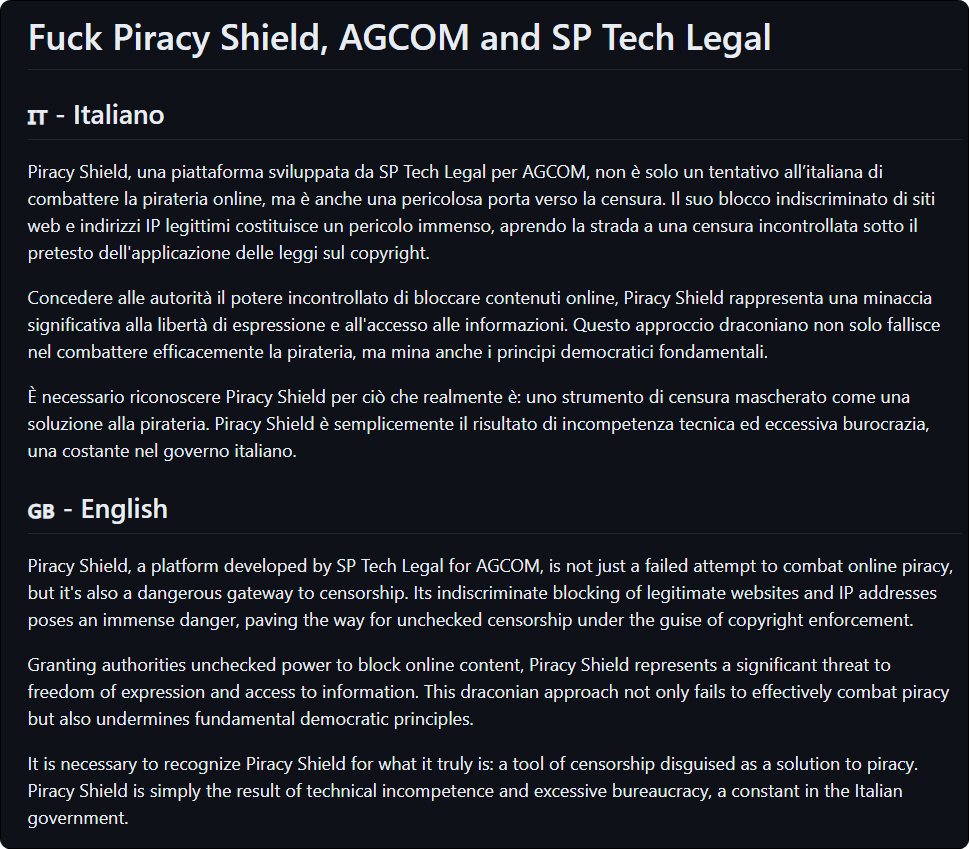
An announcement in Italian and English, posted on GitHub a few hours ago, criticizes AGCOM and SP Tech Legal, the law firm-linked developer behind Piracy Shield, for creating a "tool of censorship disguised as a solution to piracy."

Piracy Shield Leak Announcement

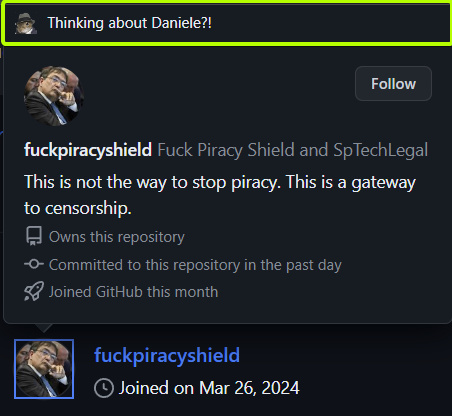
The main 'fuckpiracyshield' repository on GitHub was created by a user of the same name; they appear to have joined the site for the purposes of leaking the code online and, after signing up at 15:55 on Tuesday, by 16:50 they were gone. Aside from the leaked material, a message was left behind.

"This is not the way to stop piracy. This is a gateway to censorship," the bio message reads.

Content Allegedly Leaked

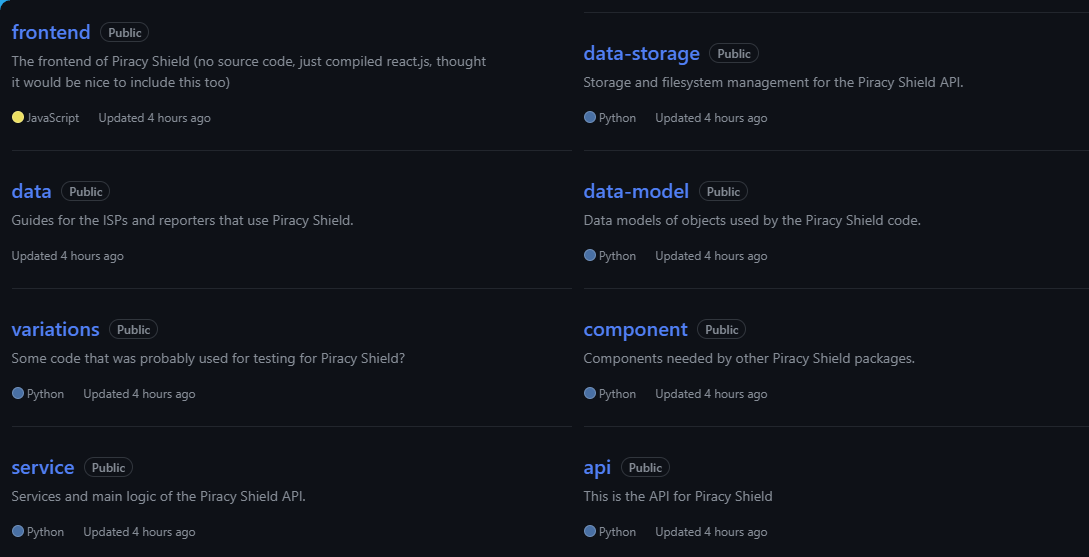
The apparently leaked collection spans nine repositories; they are named and described as follows:

frontend (The frontend of Piracy Shield), data (Guides for the ISPs and reporters that use Piracy Shield), variations (Some code that was probably used for testing for Piracy Shield?), service (Services and main logic of the Piracy Shield API), data-storage (Storage and filesystem management for the Piracy Shield API), data-model (Data models of objects used by the Piracy Shield code), component (Components needed by other Piracy Shield packages), api (This is the API for Piracy Shield)

piracy-shield-leak

For those unfamiliar with Python or no interest in code, period, the 'data' repository probably offers the most interesting information. It contains what appears to be up-to-date operations manuals for Piracy Shield, with the 'ISP TECHNICAL MANUAL – PIRACY SHIELD' described as v2.4.1, current on February 2nd when Piracy Shield made its full debut.

All documents are named and presented in Italian and the titles suggest that there are two versions of two distinct manuals: 'Piracy Shield Manual' and 'Piracy Shield Error Codes'. One version seems to be directed at those reporting domains and IP addresses for blocking and the other toward the ISPs expected to carry out the blocking.

Unusual Feature of the Leak

When browsing the source code and attempting to work out its purpose, on some repositories something immediately stands out. With no assumptions as to who the name refers, a contributor to the Piracy Shield project appears to be someone called Daniele Maglie. Their name appears time and again throughout the code, which in itself isn't especially unusual.

However, when looking more closely at the leaker's bio, which includes an image of AGCOM's president apparently deep in thought, leaving the mouse pointer in place for a moment produces a piece of popup text, as highlighted in the image below.

piracy shield popup

What the text means, if indeed it means anything at all, will be just one of the questions being asked in the days to come. In the meantime, AGCOM has yet another blocking target to contend with, although a DMCA notice will be much more effective.

From: TF, for the latest news on copyright battles, piracy and more.
Live 'Piracy Shield' Data Exposed By New Platform Reveals Akamai IP Blocking
Andy Maxwell, 26 Mar 03:01 PM

Logo piracy shieldAfter initially denying that Italy's new Piracy Shield anti-piracy platform had been responsible for any over-blocking, last week telecoms regulator AGCOM conceded that an IP address belonging to Cloudflare had been blocked in error.

While that might be considered progress of sorts, the incident was downplayed as minor on the basis it was rectified a few hours later. No consolation for the many Cloudflare customers affected, of course, but that particular problem isn't going away. Cloudflare is encouraging its customers to file complaints to draw attention to the perils of widespread blocking measures.

Yet despite calls for more transparency, not to mention an obvious need, AGCOM is still not reporting the IP addresses subjected to blocking, instead preferring to report the volume of IP addresses blocked instead. While the latter is not unimportant information, only the former can shine light on cases where IP addresses are blocked in error. Or when IP addresses are blocked despite the legal provision that prohibits blocking when IPs are not exclusively used for piracy.

New Third-Party Service Imposes Transparency

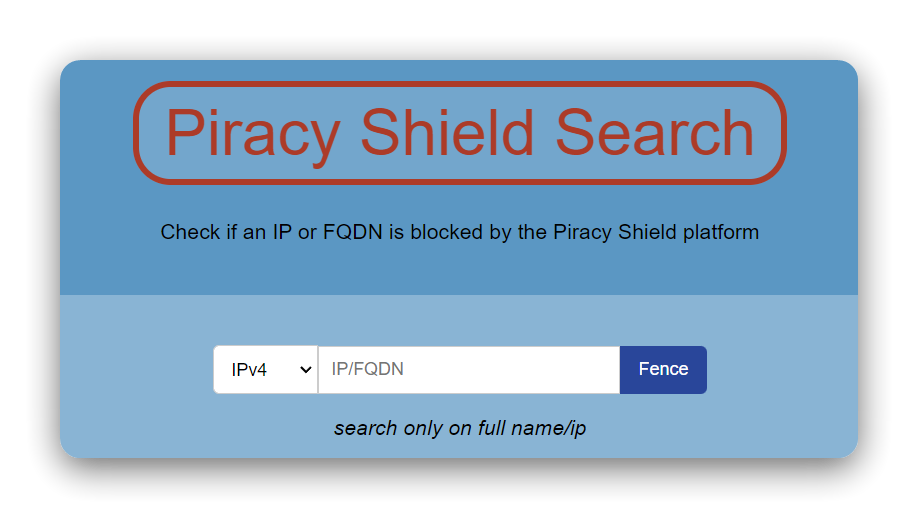
Official providers of all types of content have understood for some time that if they don't meet demand, someone else will do it for them. After calls for transparency appeared to fall on deaf ears, transparency has been imposed on the Piracy Shield system thanks to a new, unofficial third-party system: Piracy Shield Search.

The most important feature of the service is the ability to enter an IP address or a fully qualified domain name (FQDN) to find out whether they're on the Piracy Shield system.

piracyshield-search

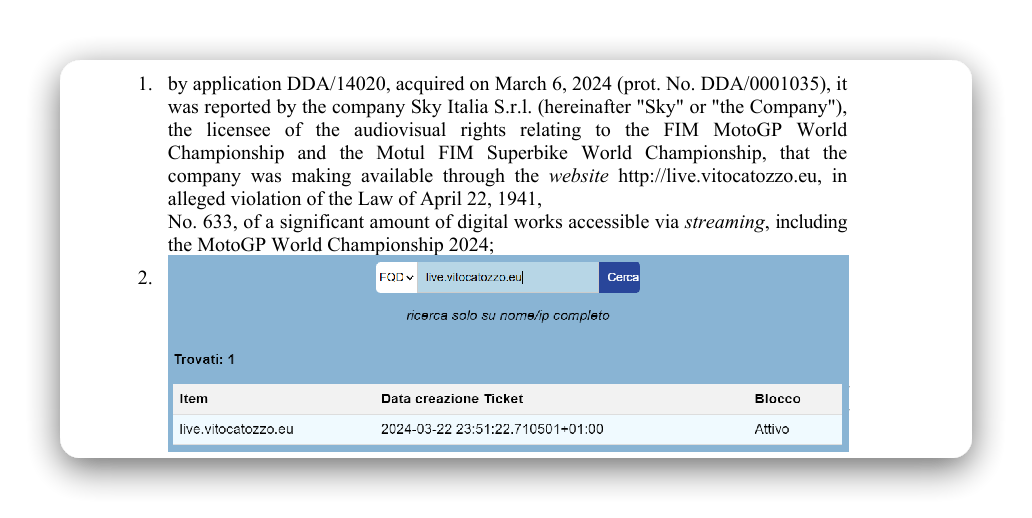
The image below consists of an original blocking order (translated from Italian) issued in response to a blocking application by Sky Italia. To protect Sky's broadcasting rights for FIM MotoGP World Championship and the Motul FIM Superbike World Championship, the domain http://live.vitocatozzo.eu was added to the Piracy Shield system.

piracy-shield-search-ticket

The response from Piracy Shield Search added by us directly underneath the relevant section in the application confirms that the domain was indeed placed on the blocklist. The response also provides the time the rightsholder or its representative added the ticket to the system, which acts as the instruction for ISPs to go ahead and start blocking.

Rightsholder Tickets and Top AS By IP Address

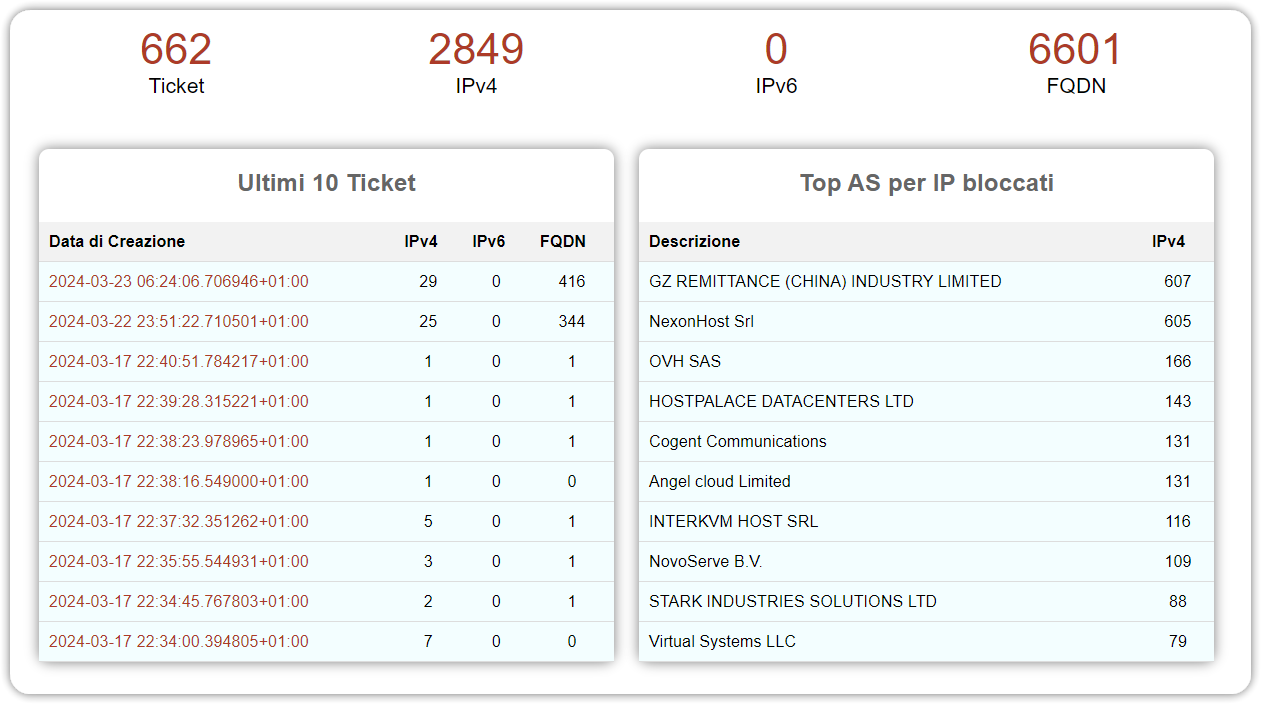
The Piracy Shield Search system shows data relating to currently active blocking, not the total number of requests made or IP addresses/domains blocked to date.

In the image below we can see that 662 rightsholder tickets are currently live, and together they target 2,849 IPv4 IP addresses, zero IPv6 IP addresses, and 6,601 fully qualified domain names. The panel on the right shows the top AS (autonomous systems) ranked by the total number of IP addresses allocated to the AS that are currently subject to blocking.

tickets-ip blocks

The ticket panel on the left shows that the system deployed in Italy operates similarly to the blocking system operated in the UK.

Much is made in the media about the requirement to block IP addresses and domains within 30 minutes, possibly to imply that blocking takes place mostly during live matches. However, the two items at the top of the list show that IP addresses and domains are typically added in bulk, long after matches finish or, alternatively, long before they actually start.

Tickets Reveal More Blocking Blunders

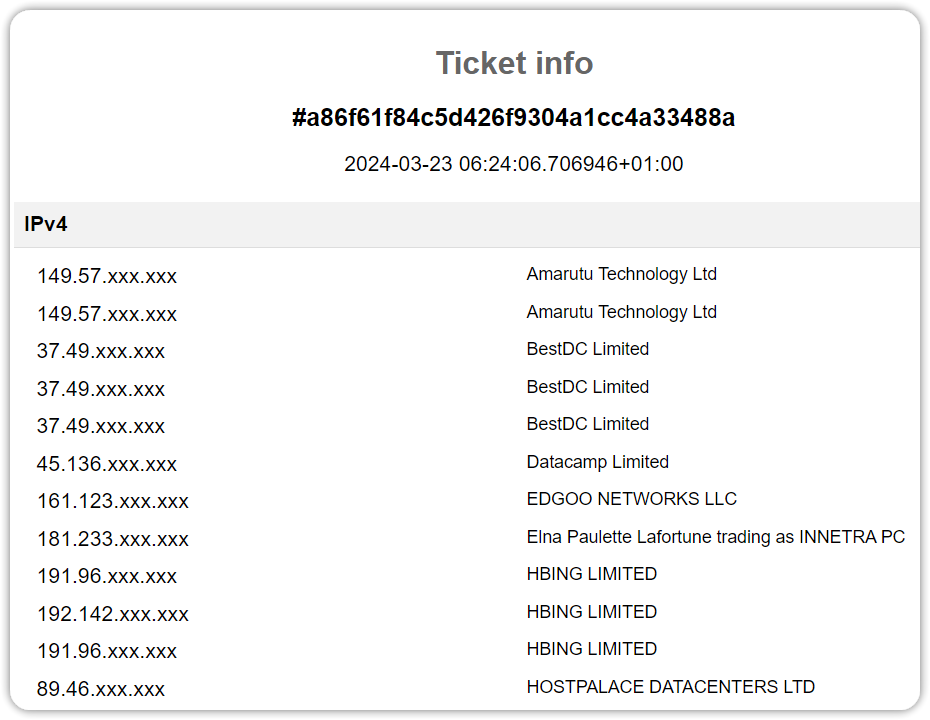
The people behind Piracy Shield Search have decided to partially redact IP addresses requested for blocking in rightsholder tickets. Since the search facility on the front page responds to requests for specific IP addresses, there's no need to expose the IP addresses in full here.

However, since the names of the hosts are displayed in full, it's possible to determine whether the IP addresses that appear on the left are likely to be operated by CDN companies. More importantly, there may also be enough information to determine whether multiple services potentially share the IP address.

piracy-shield-tickets

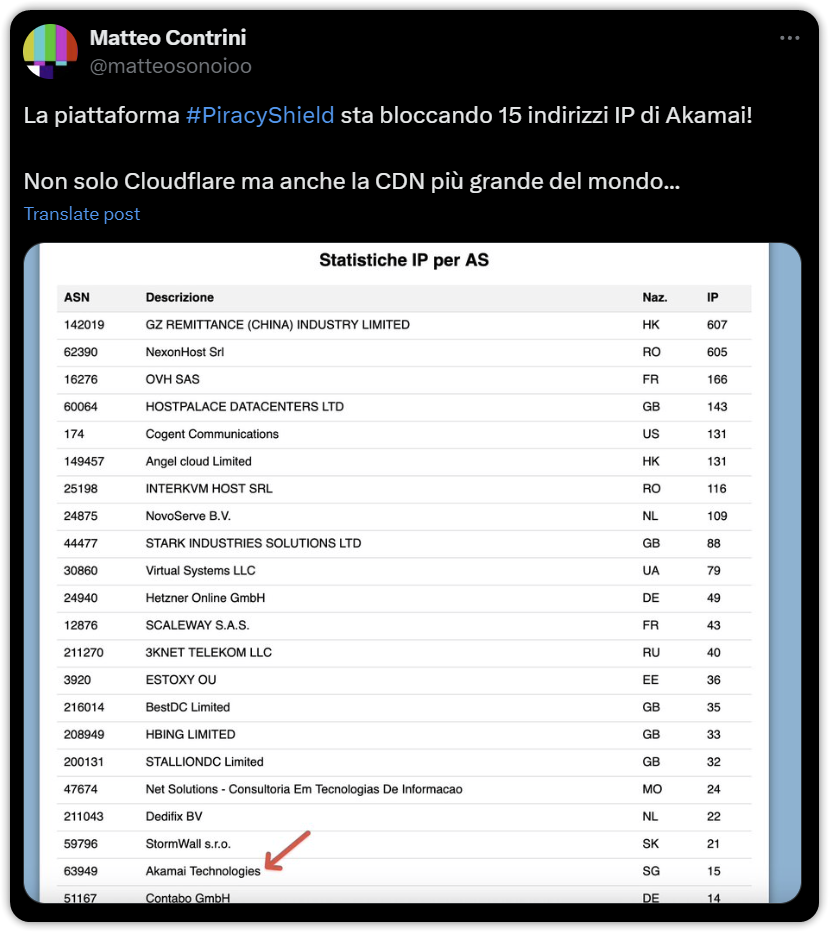
In a post to X, developer and researcher Matteo Contrini confirms what many people had suspected; Cloudflare isn't the only major CDN provider whose IP addresses have ended up on the Piracy Shield system.

akamai piracy shield blocks

"The platform #PiracyShield is blocking 15 Akamai IP addresses! Not only Cloudflare but also the largest CDN in the world…," Contrini notes.

The data suggests that transparency is a double-edged sword. Without transparency, there's no scrutiny, and no specific fuel for criticism. When transparency exists, whether voluntarily or by imposition, scrutiny ensures that criticism can be backed up by data provided by the system itself.

What transparency offers that opacity never does, however, is a powerful incentive to do better. Whether the addition of these IP addresses is due to blunder after uncorrected blunder isn't clear, but the alternative is unquestionably much worse.

From: TF, for the latest news on copyright battles, piracy and more.

270x90-blue

Are you looking for a VPN service? TorrentFreak sponsor NordVPN has some excellent offers.


Powered by Mad Mimi®A GoDaddy® company