Monday, May 29, 2023

TorrentFreak's Latest News


Music Company Asks Google to Delist 'YouTube Downloader' Wikipedia Article
Ernesto Van der Sar, 28 May 08:34 PM

wiki removed blackoutA few years ago, the RIAA started targeting YouTube ripping sites by sending relatively rare takedown requests to Google.

Instead of the usual DMCA copyright notices, the music group asked the search engine to remove various URLs for alleged violations of the DMCA's anti-circumvention provision.

The delisting requests are supposed to make it harder for people to find 'YouTube MP3 download' sites in search results. However, the targeted sites have no intention of disappearing and actively fighting back, rotating to new URL structures.

While the RIAA kicked off the great purge, the music group has since received help from the British music group BPI. And more recently, the small French indie label Because Music also joined in on the action.

To the broader public, the label is relatively unknown, but owners of YouTube download sites are quite familiar with the outfit, as its takedown volume now exceeds that of the RIAA and BPI combined.

Music Company Targets Wikipedia Entry

Most of these takedown requests do indeed target YouTube downloaders. While the legality of these sites is subject to legal debate, YouTube owner Google generally accepts them as valid DMCA notices and removes the URLs.

Not all notices are flawless though. In the past, we have seen imposters abusing the takedown process to delist sites of competitors, for example. In addition, some notices appear to be quite broad, targeting sites that simply link to YouTube downloaders.

This week we spotted a notice, reportedly sent by Because Music, that falls into the latter category. In addition to streamripper URLs it also targets them indirectly, by going after a Wikipedia entry, for example.

wiki dmca

The highlighted URL in the above notice lists Wikipedia's "Comparison of YouTube downloaders" page. This overview links to sites that the music industry deems to be infringing, and Because Music asked Google to remove them from the search results.

Should Google 'Censor' Wikipedia?

At first glance, this may seem like an overbroad request. That said, music groups could make a case that this type of content shouldn't be on Wikipedia at all. In that case, it might make more sense to complain to Wikipedia directly.

The same notice also links some other URLs that are at least one step removed from any potential DMCA violations.

There's a link to a Facebook post, a page from traffic analytics company Similarweb, a Trustpilot review, and an uptime status checker. None of these sites host problematic content, but they mention or link to YouTube downloaders so should be delisted, according to the music company.

The same applies to sites that host apps. The takedown notice also lists a Chrome and Firefox addon, as well as a Softonic page that provides a list of Android and Windows-based YouTube downloaders.

updown

Ironically, Because Music's DMCA notice also lists a Soundcloud page that mentions Yt1s.com, likely because someone used the YouTube downloader to rip tracks that were then posted to the site.

While most of these links remain in Google's search results, the links to Similarweb and Updownradar are no longer indexed. Whether this was done automatically or after a deliberate review is unknown. The Wikipedia page remains online.

The Big Delisting Battle Continues

Whether Google should or shouldn't take action, is ultimately something a court would have the final say on. However, the above shows that the big delisting battle is slowly edging towards indirect takedowns.

We have to say, though, that it's often hard to see which takedowns are real and which ones were sent by imposters. The one we highlight here was presumably sent by a French label Because Music but, according to Google, it was sent from Burundi, which seems odd.

By now, YouTube downloaders should be familiar with these delisting efforts. TorrentFreak spoke to the operator of a large number of sites, who prefers to stay anonymous. He has noticed a clear uptick in suspicious and broad requests but tries to get around them to remain in search results.

"I have quite a few sites, hundreds to be specific. It is my strategy to fight Google core updates and delistings," the site owner explains.

"Sometimes it actually helps, when your competition disappears from Google, if even for a few hours. But these days 'delisters' instantly see your site coming up through ranks and delist it too," he adds.

This doesn't mean that the takedown notices and delistings have no effect at all. Dealing with this problem is slowly starting to take its toll. At least on some of the people that run these sites.

"I am honestly considering a different way of making money.. they are winning," the operator says, half-jokingly.

From: TF, for the latest news on copyright battles, piracy and more.


Powered by Mad Mimi®A GoDaddy® company

Sunday, May 28, 2023

TorrentFreak's Latest News


A BitTorrent Client WebUI Shouldn't Be Shared With The Entire Internet
Andy Maxwell, 27 May 10:41 PM

pirate tvThe word 'open' in a connected world can be something positive. Open source, for example, or open library. On other occasions the opposite can be true; unnecessary ports left open on a router springs to mind.

For millions of people using devices that appear to configure themselves, whether something is open or closed is irrelevant. If a device immediately works as promised, oftentimes that's good enough. The problem with some internet-connected devices is that in order to immediately work in the hands of a novice, security gives way to ease of use, and that can end in disaster.

Torrent Client WebUI

Many of today's torrent clients can be operated via a web interface, commonly known as a WebUI. A typical WebUI is accessed via a web browser, with the client's IP address and a specified port number providing remote access.

In a LAN environment (the part of a network behind the router, such as a home) the torrent client's web interface serves local users, i.e those with direct access to the local network, typically via Wifi. The problems begin when a torrent client's WebUI is exposed to the wider internet. In broad terms, instead of the client being restricted to IP addresses reserved for local uses (starting 192.168.0.0 or 10.0.0.0), anyone with a web browser anywhere in the world can access the UI too.

In many cases, a WebUI can be secured with a password or by other means but when users are allowed to do that themselves, many never do, despite the warnings. That could end in disaster if the wrong person decides to let rip from the other side of the world.

Specialized Search Engines

Internet-connected devices are easily found using services such as Shodan, Censys, Fofa and Onyphe.io and those that are poorly configured are in plentiful supply.

tixati1

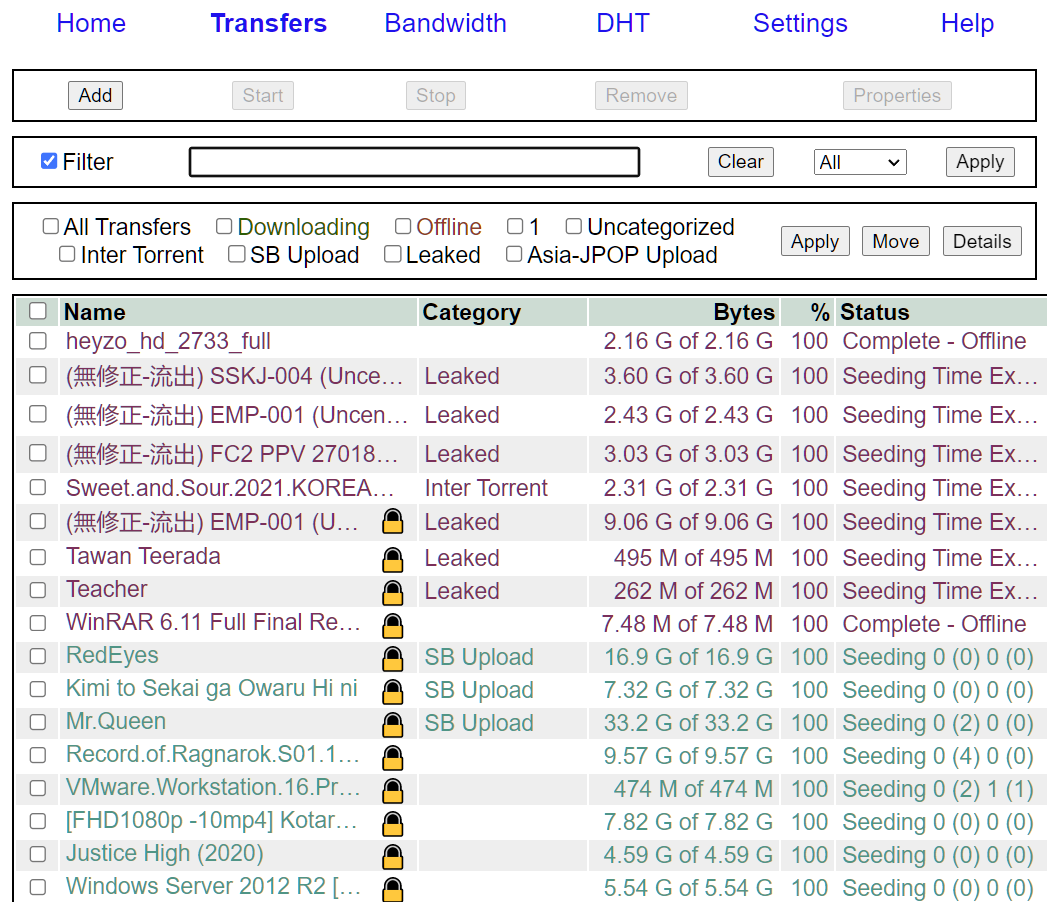
The image above shows a WebUI for the Tixati torrent client. With zero security, everything is on full display, just as it is for the person who operates the client, whoever they might be. This means that all downloads and uploads can be browsed, including data related to those transfers, as seen below.

tixati2

It can take just a couple of minutes to find hundreds of open clients. A common WebUI seen in the wild belongs to qBittorrent but the overwhelming majority are locked down, just as they should be.

That's Not Ideal

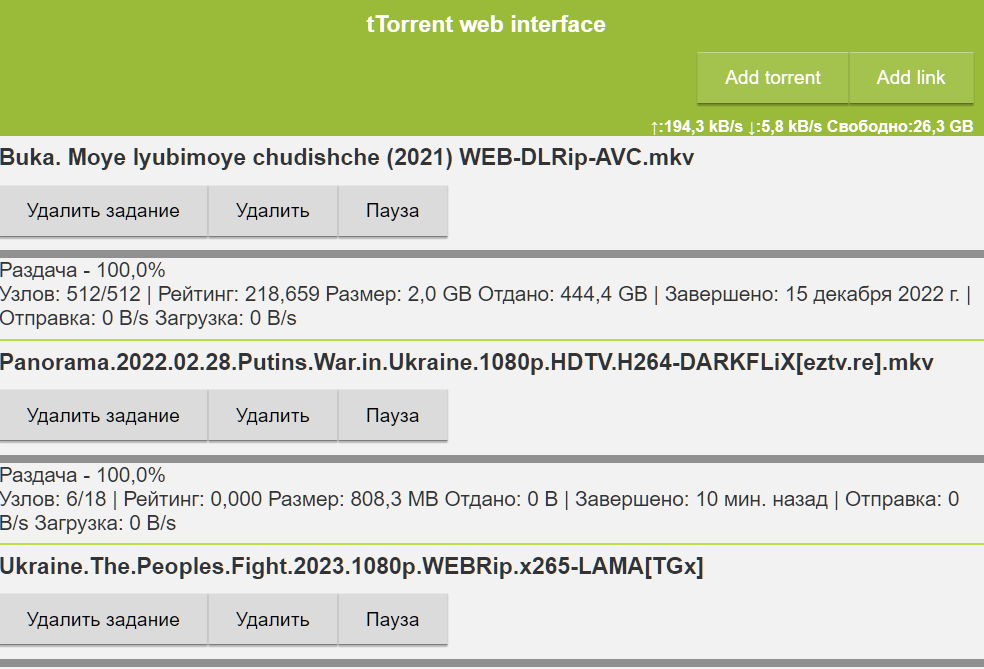
For reasons that aren't entirely clear, the Android torrent client 'tTorrent' is quite popular in Russia.

ttorrent-rus

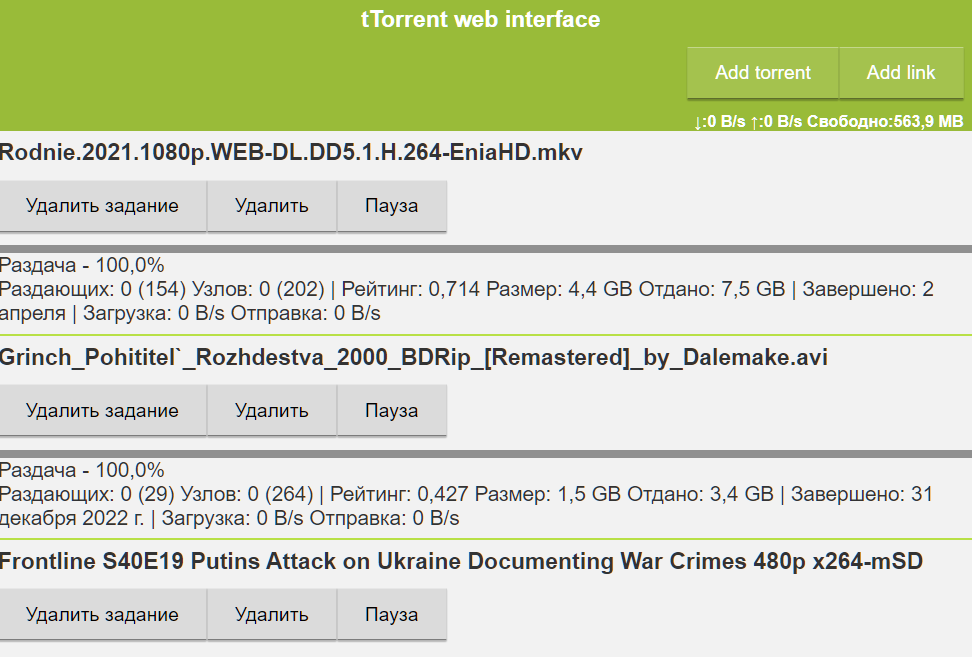
It's possible that people install tTorrent on always-on set-top boxes, so the latest movies are ready to go as soon as they get home from work, or the local bar. The problem here is that with an entirely exposed WebUI, people can find out what Russians are downloading.

ttorrent12

The average Russian citizen probably won't mind if outsiders discover their Mortal Kombat habit; they made the decision to download it, so that's that.

But what if strangers passing by in the night had influence over content consumed locally? What if those strangers decided to utilize their control of an open WebUI to share news from the other side of the world, downloaded directly to their new friend's Android device?

If they did, it might look a lot like this….

ttorrent13

ttorrent11

From: TF, for the latest news on copyright battles, piracy and more.


Powered by Mad Mimi®A GoDaddy® company

Saturday, May 27, 2023

TorrentFreak's Latest News


2.5 Billion Visits: ACE Targets 9anime Among Several Pirate Anime Sites
Andy Maxwell, 26 May 10:40 PM

gotchaIn the face of legislation designed to thwart its growth, seizures, prosecutions, dozens of arrests and countless prison sentences have done little to prevent piracy.

Anti-piracy enforcement actions, including dozens by the Alliance for Creativity and Entertainment, have taken hundreds of sites out of the game. That's a solid base for arguing that piracy volumes could've been much worse without so much enforcement.

The reality is that sites continue to emerge with some notable examples generating extraordinary levels of traffic, at a scale never seen before. History tells us that won't continue indefinitely; pirate sites may come and go but Hollywood is in for the long haul – and then some.

9anime: Huge, Successful, and a Prime Target

One of the current batch of piracy behemoths is 9anime, a free streaming platform dedicated to Japanese cartoons. It currently receives in excess of 214 million visits per month, an incredible 2.5+ billion per year.

9anime

A DMCA subpoena application filed at a California court on Thursday shows that ACE has not given up on its plan to reduce 9anime's traffic to zero. Like many times before, ACE – via the MPA – wants Cloudflare to give up information on its customers, 9anime included.

This information typically includes names, physical addresses, IP addresses,
telephone numbers, email addresses, and payment information. However, ACE also seeks additional information relating to account updates and histories, which could help to fill in some crucial blanks when combined with intelligence obtained elsewhere.

9animetv-to-traffic April23

There's no doubt that 9anime will remain a priority enforcement target. At the time of writing the 9animetv.to domain is ranked #164 globally and with over 30% of that traffic coming from inside the United States, it represents one of the squeakiest wheels in the entire online piracy market.

Sites Under The Spotlight

Also mentioned in Thursday's applications is allanime.to, a site offering anime, manga (Japanese comics) and associated music. The domain became popular in February and since then traffic has increased considerably, to a current level of around 4.7 million visits per month. In common with 9anime, over a third of allanime's traffic comes from the United States, assisted by social media referrals, the majority on YouTube.

Two other anime-focused domains – animefreak.site and animet.site – also get a mention. The former receives under half a million visits per month according to SimilarWeb, with the latter apparently receiving just a couple of thousand.

With no obvious public web presence and a domain that won't resolve, Anifastcdn.info receives no traffic at all by most accounts, but that's certainly not the case. While the platform uses Cloudflare in the United States, its servers appear to be on the other side of the Atlantic and not that difficult to find either, certainly for an operation like ACE.

Cloud Storage

Two other platforms attracting ACE interest have more visible levels of traffic. Ninjashare.to heads the list as a growing platform; after pulling in 11.8m monthly visits in February, the cloud storage platform received 15.8 million in April.

rapid-cloud-co

Also mentioned in the DMCA subpoena application is rapid-cloud.co, a storage platform sporting Vidcloud branding and around 4.5 million monthly visits. According to ACE, specific content accessed via rapid-cloud actually came from betterstream.cc, which also has no obvious public web presence but does have significant traffic.

When Cloudflare hands over information to ACE, it may prove informative but there's a reasonable chance the data won't amount to some big reveal. But it might eventually, so as long as these and similar sites are in business, ACE can return to court again and again to obtain subpoenas just like this one, for less than $50 a pop.

It will probably continue to do that, for as long as it takes.

Image Credit: Pixabay/geralt

From: TF, for the latest news on copyright battles, piracy and more.

Court Orders Instagram to Expose Pirates, Boot Their Accounts, and Purge URLs
Ernesto Van der Sar, 26 May 01:23 PM

instagram logoSimilar to any other online platform that deals with user-generated content, Instagram processes copyright complaints on a daily basis.

Most of these arrive in the form of DMCA notices, in which rightsholders requests the removal of a specific image, video, or URL.

The number of removals runs in the hundreds of thousands during a typical month, without getting noticed by the public at large, but if Instagram users continue to post copyright infringing content, they risk losing their accounts.

Takedown Trouble Triggers Lawsuit

This takedown policy is widely accepted as the standard for social media services but every now and then, disputes can arise. In India, one such dispute turned into a legal battle in which the Bombay High Court issued a broad injunction earlier this month.

The lawsuit in question was filed by Applause Entertainment, the Indian company behind the TV-series "Scam 1992". The series covers the 1992 Indian stock market scam, adapted from Debashis Basu's book The Scam.

The TV production is licensed to Sony LIV and was a huge success. However, as often happens with popular media, pirated footage was readily available too. Not just on pirate sites, but also on otherwise legitimate social media platforms.

Applause Entertainment wasn't happy with this pirate activity so it approached several platforms to take down infringing clips and snippets of the show. Instagram was one of the recipients but, instead of taking immediate action, the platform asked for proof of ownership.

The company responded to this correspondence with relevant ownership documents but, apparently, Instagram still wasn't convinced. This standoff prompted Applause to take the matter to the Bombay High Court, where it requested an ex-parte injunction.

Court Issues Broad Injunction

The High Court concluded, after reviewing the evidence, that the studio does own the rights so Instagram must take action. This isn't out of the ordinary but the court went further than simply asking the infringing posts to be removed.

As highlighted by the law blog SpicyIP, the court issued a so-called dynamic injunction, which goes much further than a simple takedown request.

scam1992

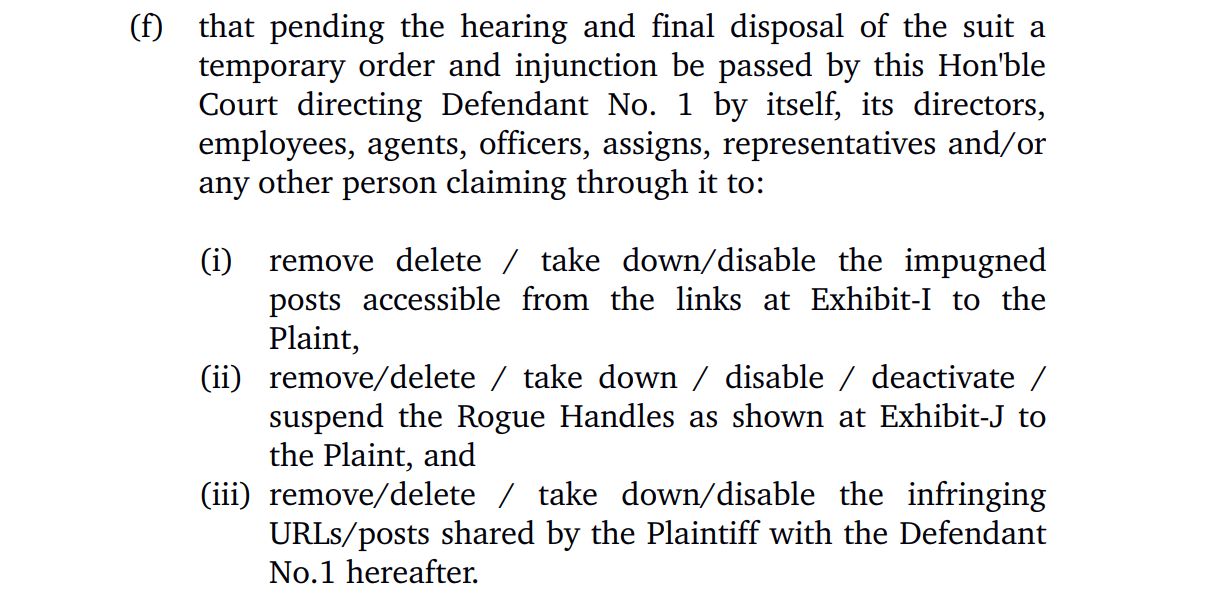
In addition to removing the pirated clips, Instagram must also terminate the accounts of 33 affected users, while handing over their personal details including email addresses, phone numbers, and physical locations.

Specifically, Instagram must disclose personal user data, "including but not limited to the contact details, mobile numbers, email addresses, IP addresses and physical locations / addresses of Defendant Nos. 2 to 34."

The injunction's scope doesn't stop there. In addition to removing the reported posts, Instagram must also remove other infringing URLs from its platform. This implies broader filtering and could affect other users who shared similar links. The same applies to other "rogue handles" that the users potentially used.

A Blunt Anti-Piracy Tool?

According to SpicyIP, the court appears to put Instagram users in the same category as pirate websites. Previously, the court ordered flagrantly infringing pirate sites and their 'mirrors' to be blocked, but social media accounts might require a different treatment.

There are no signs that the court investigated the user accounts, so it's possible that some posts were relatively innocent. Alternatively, they may be classified as fair use.

"There is the possibility that of these defendants a few of could have been genuine social media handles that have several legitimate pieces of content, and that there was a 'mere re-sharing' of the content in question in one shared reel or post.

"There is also the possibility that the handles, used the 'short audio-visual' clippings to make Instagram reels. This could have included licensed content from other sources, or fair dealing uses," SpicyIP adds.

The court order doesn't go onto detail on the nature of the posts, so it's hard to draw any strong conclusions. In any case, the High Court has shown once again that copyright infringement matters are taken rather seriously in India.

Whether Instagram plans to challenge the injunction is unknown. Telegram previously did so when it was ordered to expose alleged copyright infringers, but that challenge failed.

—

A copy of the order issued by the Bombay High Court is available here (pdf)

From: TF, for the latest news on copyright battles, piracy and more.
 
 
Powered by Mad Mimi®A GoDaddy® company