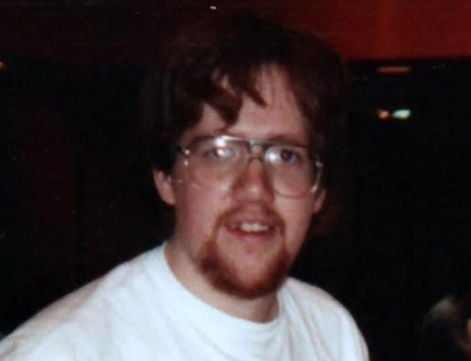
 More than forty years ago in the early eighties, Texas Instruments home computers were all the rage.
The world wide web didn't exist yet and most people interested in these new devices saw themselves as tinkerers or hackers.
These original 'hackers' tried to put the hardware to use in ways that others hadn't envisaged. This was also the case for a Canadian teenager named Gary Bowser, who founded the company "Oasis Pensive Abacutors" (OPA) in March of 1985, a few months before the Nintendo Entertainment System was released in America.
These Oasis Pensive Abacutors had absolutely nothing to do with the successful gaming console, but Bowser would later become one of Nintendo's largest threats. Under the nickname GaryOPA, Bowser was affiliated with the infamous Team-Xecutor, a group that Nintendo claimed had caused millions of dollars in losses.
Decades after launching his first computer company, Gary was living in the Dominican Republic, serving as a webmaster and news writer for the hacking group Team-Xecuter. This job netted between $500 to $1,500 per month, but it also led to a 40-month prison sentence following his arrest in 2020. It was a heavy price to pay.
Today, the former hacker is a free man again, looking for a job and seeking support through a GoFundMe campaign, hoping to build back his life piece by piece.
To understand where Gary came from and for much-needed context, decades of important history must be unpacked. The background is by no means an excuse, but it does add a much-needed human element to the Bowser jokes and million-dollar headlines produced by the press in recent years.
After his release from prison, Nick Moses helped to connect us with Gary, who kindly agreed to tell his side of the story, in his own words. This isn't a tale of a typical criminal career; GaryOPA gradually slid into the business, which was far from his dream job or passion.
1983: OPA is Born
Gary's venture into the world of computers became serious in his early teens. As an early adopter of technology and electronics, he taught himself how to code. The TI-99 home computer, released by Texas Instruments in the early '80s, offered a welcome playground.
"I started out building hardware and software for the Texas Instruments Home Computers," Gary notes, pointing us to some examples of the products on his new website GaryOPA.com.
At the age of sixteen (1985), this hobby grew into a company, launched with help from an inheritance from his mother who had just passed away. The name of the company, Oasis Pensive Abacutors, also explains the GaryOPA nickname he still goes by today.
Oasis Pensive Abacutors was a term Gary came up with to describe his goal of building a thinking (pensive) abacus computer (abacutor). This all happened after his family left the desert of Arizona and moved to Canada, which explains the final oasis reference.
OPA's BOOK-KEEPER software
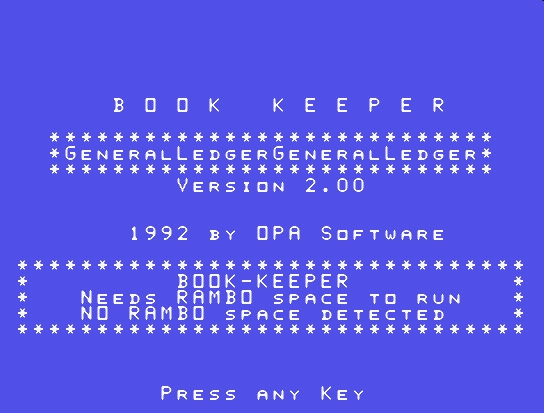
Gary's company made hardware and software for other computer-minded people. This includes the BOOK-KEEPER software featured above. This program could be used to store a large volume of accounting data while supporting basic sorting and editing functions.
1993: Interactive Kiosks
This initial business venture went relatively well and continued under the OPA flag for roughly a decade. In 1993, Gary eventually moved on to run another company, New & Improved Technologies (NIT), using his knowledge to build interactive kiosks.
NIT eventually came up with the 'GMTA System' that, among other things, was able to replace traditional advertising posters with digital versions displayed on a plasma screen. That was revolutionary at the time, as the promo text below shows, and some of this technology remains in use today.
GMTA promo text

For a while, the startup was destined for a great future, but the timing was horrible. GMTA relied on its own operating system and was incompatible with Windows, which was already taking over. As a result, the government permanently suspended its funding and shareholders pulled out, eventually leading to NIT's demise.
1998: The Internet Starts Brewing
Gary didn't stop tinkering with hard- and software after this setback. Computers remained his true passion and when the World Wide Web started to take off in 1998, he started the Ontario company "Gen-X Computers"; a PC building shop, Internet café, and gaming arcade in one.
This sounds like a geek's dream job but the gaming element eventually opened the door to a darker side of technology that would dominate Gary's life for the next two decades.
"It started with repairing gaming consoles, such as the Dreamcast, Xbox, and PS1, and then it was learning how to mod them," Gary recalls. "On the computer side, I started learning about CD burners and such, it was a slow slide down the rabbit hole as they say."
These activities were not limited to the offline world. By 2003, "GaryOPA" was a household name on various hacking-related gaming forums. First as a relative newbie, but it didn't take long before he became the resident expert.
"Because of my advanced skills in designing hardware and coding on early computers, I quickly found out that working on modchips was basically just good old low-level coding. Soon after, I was building up my reputation on early scene sites including XboxHacker BBS, PSX-Scene, and Xbox-Scene."

These sites, which are no longer around in their original form, also introduced Gary to various new contacts in the game hacking scene. That included XiaNaiX, the owner of PSX-Scene, who asked him to help manage and host the website.
At the end of the 2000s, the Canadian operated a thriving game and computer 'repair' business with multiple stores. The Internet café was still running as well and with one of the best Internet connections in Toronto, it became a good hosting location too.
2008 Criminal Investigation
While Gary enjoyed business success and his growing online reputation, he was suddenly introduced to the downsides. The Canadian authorities, likely tipped off by the gaming industry, started looking into the consoles and blank DVDs that passed through one of his stores. They suspected that it was hiding a massive modding operation.
It transpired that the store in question didn't have any modded consoles or pirated games. However, pirated movies were sold as a side hustle at a flea market, where one of the investigators convinced an employee to sell a home arcade based on a modded Xbox.
The employee also agreed to sell two burned discs to the investigator. These homebrew discs were sold at the store, which implicated Gary, and these allegations were eventually brought before the court.
Fearing the worst, Gary and the employee committed to voluntary community service, even before a judgment was handed down. That paid off as the court agreed to issue a suspended sentence, while the company was allowed to continue doing business.
"I was not doing anything with pirated games, or modding consoles, just replacing Blu-ray lenses and DVD drives, re-balling, and replacing broken screens and cases on Nintendo DSs at the time," Gary recalls.
Geohot
Despite the reminder that there can be consequences for tinkering 'too much' with consoles, GaryOPA continued to lecture on the subject online. And when George Hotz, aka Geohot, posted a copy of the PlayStation 3's private key online, traffic to game hacking sites blew up.
This was also the case for PSX-Scene, which Gary was hosting, managing, and posting on at the time. With rivalry growing between game hacking sites, he suddenly had to advance his security skills. Meanwhile, legal pressure was building, especially after Geohot was sued by Sony.
Faced with growing turmoil, the owner of PSX-Scene wanted out. In 2011, he eventually sold the site to a third party, which aimed to unite several gaming sites. GaryOPA could stay on for a monthly salary of $500 if he promised to publish there exclusively, but he declined that offer.
"I decided that it was not worth the money, and my reputation and name were worth more than just $500 per month, Gary recalls.
This seemingly random decision seemed wise, but it was also the start of what would turn into one of the darkest periods of his life. After waving PSX-Scene goodbye, the site's former owner referred him to someone else who needed help with gaming sites; Max.
Max ran a bunch of operations such as PS3Crunch and 360Crunch, which eventually merged into MaxConsole. Along with Gary, the same Max would later be named as a co-conspirator in a United States government indictment. Unlike Gary, however, Max is still on the run today.

Team-Xecuter
The shift from being a coder and builder who shared tips through online forums, to becoming part of Team-Xecuter – one of the largest hacking groups Nintendo has ever faced – happened before Gary could fully grasp what was going on.
At the end of the 2000s, Gary sold his Canadian business and moved to the Dominican Republic to work on real estate projects with a friend. That business failed after the 2008 crisis and his savings quickly vanished.
While managing and posting news on hacking-related sites wasn't a dream job, Gary was happy to take it at the time.
Working on MaxConsole in the Dominican Republic

GaryOPA was put in charge of maintaining MaxConsole and earned a basic salary of $500 per month. As part of this deal, he had to post updates on modding devices and the Team-Xecuter suite of products. In addition, he was allowed to keep the site's advertising revenue, pushing his overall income to somewhere around $1,000 per month.
This isn't the scale of income one might associate with a 'criminal' but Gary never saw himself that way. As an original hacker, his main interest was to unlock the power of hardware for homebrew projects and to emulate old systems.
Millions?
The fact that Team-Xecuter wasn't operating completely within the boundaries of the law wasn't news, of course. Gary never actually met other Team-Xecuter people in person and only spoke to Max over the phone occasionally.
Gary didn't see the millions of dollars being made either. On the contrary, he lived a pretty modest life in the Caribbean.
"I was not hosting the websites directly, nor was I profiting in the actual sales of devices and such. All that money went towards the actual developers and resellers," he notes.
Gary's main role was to post news and updates on the releases. This would then be picked up by other sources. He also acted as a middleman between testers and developers, ensured the sites were secure, and occasionally dealt with resellers.
With a hosting business on the side, Gary earned roughly $3,000 per month. That was plenty of money to get around, especially in a Caribbean country where an average lawyer earns around $1,200 per month.
While having enough money is great, the work wasn't all that appealing. When we asked Gary to recall some of the best memories he has from that time, nothing in particular came to mind.
"I can not think of anything, it was just a daily grind of doing things, in some ways maddening, and not really my passion for making actual hardware and software. That is my first love, so between posting news on websites, keeping them running, and chatting with people, nothing really stands out."
Arrest and Conviction
What did stand out was his turbulent arrest in 2020, which came as a complete shock, right around the time when the first Covid lockdown was ending in the Dominican Republic.
"It was a total surprise to me. I never thought they would go to the trouble of coming to the Dominican Republic. It's not like I was running drugs or guns, or running away from murder," Gary notes.
The evening before the arrest, Gary was looking forward to going out again for the first time in months. He loved going to the beach or driving around the island. He didn't get the chance to do any of that.
"Instead, I woke up with guns pointed at my head, and me yelling at them, both in English and Spanish. Yet, they acted like I was speaking German or Russian, not answering my questions or telling me what was going on."
Eventually, Gary found out that he was being taken to the Interpol office where his papers would be checked. If these were not valid, he would be kicked out of the country, which is what eventually happened.
INTERPOL Office in Santa Domingo

It was three days before Gary heard any news. In the meantime, he was locked in a metal case in the pouring rain, without any food.
"After three days they promised to buy me a Burger King meal and take me to the Canadian consulate. Instead, they drove me to the airport. There, I started yelling and screaming, demanding to speak to the Canadian consulate."
Gary never arrived at the consulate but he did get a plane ticket to Toronto, Canada. While he boarded the plane, he never reached that destination either. Instead, U.S. authorities took him into custody during a mandatory refueling in New Jersey.
The arrest was the start of a trip to several jails around the country before he finally ended up in the Federal Detention Center, SeaTac, in Seattle. By then, months had passed and he could finally work with a lawyer to prepare his defense.
This is where history begins to meet court records, which we have reported on in detail over the past two years.
After pleading guilty, Gary was eventually sentenced to 40 months in prison for his role in the criminal enterprise. The sentence was significant but lower than the five-year prison term requested by the government. In part due to good behavior, he was released on May 25 this year, also known as Towel Day among nerds.
Getting Back on His Feet
Life in prison wasn't easy but as a 'people person', Gary managed to get around, staying far away from trouble. Being a free man again today is a huge relief, but getting his life back on track isn't easy.
"It hasn't been easy trying to get things going again. It's a daily struggle just to survive another day, basically being homeless, jobless, friendless, familyless," Gary says.
"With just pure luck and a couple of good friends, I have been able to arrange a cellphone, laptop, and partial roof over my head, if you can call sofa-surfing a home. But I'm a strong-minded person, always stay positive, and plan things out; so my outlook on the future is good."
Gary is hoping to get fully back up on his feet in the near future and he's dreaming of a simple and legitimate job in the IT field. Ideally a remote job, due to his health problems.
Gary suffers from Lymphedema in his left leg, starting just below the kneecap down to the ankle. Wearing shoes is still possible, but long walks are a real and painful challenge.
A cane and wheelchair have been helpful to get around and Gary is also hoping that Canada's public health care system can improve his condition. However, that requires a lot of paperwork and there are no guarantees that everything is covered.
"Hopefully I can get disability coverage and then proper treatment, but it's not been easy without coverage," Gary says.
Hopes and Dreams
Gary is grateful for the help he has received from friends over the past several weeks, but after everything that's happened, plenty of people want nothing to do with him anymore.
"I will forever be remembered as a criminal, so there are a lot of people that will no longer talk to me. That includes people who were part of my actual family, including my half-sister and brother, who believe that I've tainted the Bowser family's name."
On the family side, Gary still has hopes and dreams as well. Having reached the respectable age of 54, he wouldn't mind becoming a father again, if that opportunity presents itself.
"That's a part of life I enjoy as well. I have raised a few sons over the decades. Sadly one of them, my adopted stepson, passed away in his early twenties in the Dominican Republic from vaping in 2019, just a year before my arrest.
"I have always been a father figure to people in their lives, and as such would not mind raising another kid," Gary says.
Finally, there's the passion that started it all. The tinkering, the hacking, and the TI99s. These are still in his future plans as well.
"My dream, once I have done the hard part of finding a job and a place to live, is to get back to my original passion for building retro hardware and software," Gary notes.
"It all started with the Texas Instruments systems, and there's currently a strong rebirth of hobbyists who produced some amazing new products for the over-40-year-old system."
Gary demoing his OPA TI99 products at a TI Chicago Fair (early 90s)

Gary says that he wouldn't mind sharing his retro 'hacking' knowledge in the gaming scene but from now on, he will make 100% sure that everything he does is completely legitimate.
—
People who want to learn more about Gary can check out his official website at GaryOPA.com as well as his GoFundMe page. Gary owes millions of dollars to Nintendo which he has to repay starting in December. He believes that these donations are separate from that.
The information shared in this article is filtered from an unchecked reflection of Gary's memories.
From: TF, for the latest news on copyright battles, piracy and more.




 Generative AI models such as ChatGPT have captured the imagination of millions of people, offering a glimpse of what an AI-assisted future might look like.
 The Alliance for Creativity and Entertainment (